Nurtured by Love

Year: 2012

  • Suffer-bike-run

    Suffer-bike-run

    Sufferfest went almost exactly as I expected, except that it was harder, and more fun, and the weather was exceptionally fine. So, not exactly as I expected. But close.

    The bike ride was long and hard. The 45k included about 1400 metres of climbing. I was worried I wouldn’t finish before the course closed: a number of people didn’t finish, and a few sneaked in just past the official cutoff but were granted finishes. It was a hard physical slog for longer than I’ve ever worked that hard. Longer than my marathon. I finished in under 5 hours, though not by much. Official times have not been posted. But I’m told I came 3rd overall among female riders. Maybe there were only three women? There were about 40 riders but it seems most of them were male.
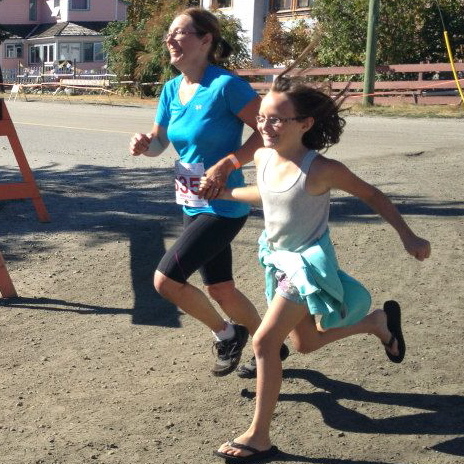
    Surprisingly I felt pretty good once I had a chance to catch my breath at the end of the day. I had a scrape on my leg from a small crash but that was all. I went home, slept and got up for the run. Muscles still seemed happy enough to oblige.

    The 25k run was fine. It had about 650 metres of climb and an equivalent descent. As expected my bones and gristly bits held up well and the next day I just had a pleasant amount of muscle soreness. I managed to shave about 5 minutes off my 2010 time, sneaking in under 3 hours. Two years older and 5 minutes faster, even after a huge bike ride: I’ll take it!

    It was a really motivating weekend. Especially with respect to the bike. I have a decent amount of endurance, but I realized it would help to be a lot stronger when it comes to powering up hills. So there’s something to work towards for next year.

    Next year I’d like to do the bike ride again. And I think I’d like to run the 10k with Fiona. She’s started running with me and would like to keep that up. There were an impressive bunch of kids running the 10k this year, and she would like to be part of that next year.

  • Sufferfest v2.0

    Two years ago I ran the 25k Sufferfest True Blue trail run. I hadn’t trained specifically for it, though I had been training hard that summer. It was the first year for Sufferfest and I wanted to support the event, just a stone’s throw from my home town. I originally thought to run the 10k event, though the 25k looked enticing. I had just run my first-ever race, an Alberta (i.e. flat) Half Marathon three weeks earlier and was feeling good. I figured an extra 4 kms wasn’t that big a difference.

    But it turned out the Sufferfest trail run was a whole different animal. Steep up, steep down, rooty and rocky. I had also just switched over to minimalist trail shoes and though I had run in them a fair bit, I hadn’t really run any trails. I felt great at the outset and ran hard — over all that crazy terrain, which quickly took its toll on me. My knee and my foot were paying the price by the end and I did a long rallentando to the finish line. It took me weeks to recover.

    So you’d think that if I entered Sufferfest again I’d be a little more judicious in my choice of events. But no, I’ve gone an entered the 25k again, despite a summer of little to no training. I’ve been running on and off, but no real long runs, only a handful over 5 km and nothing at all systematic. (And I’ve entered the 45k mountain-bike race the day before. It’s a length that’s almost double the longest trail ride I’ve ever done in my life.)

    My old friend the Minimus 10

    The bike stupidity aside, I feel differently about it all this time around. I have a lot more experience pacing myself over long runs and steep trails. I’ve been running in a minimalist way for a long time now. I plan to run in my Minimus Trail 10’s. They’re considerably more minimalist than the shoes I ran my first Sufferfest in, but now they rank as old favourites, and more shoe than I usually run in. On roads I run barefoot. On rough trails these days I wear either Unshoes, my home-made huaraches or Minimus Zeros. So the Minimus 10’s are a solid old standby. I know they’ll work for me. My muscles, ligaments and tendons have adapted to this kind of running — and some — and I’ve done a lot of miles on exactly the sort of trails I’ll be running this weekend. I’ve also noticed that my body is pretty good at endurance running. It forgives my completely non-systematic increases in mileage. I’m fine running nothing more than 5 km for a couple of months and then going out and doing a challenging 15k. Sure, Sufferfest is a big run and I’ll be tired and sore as stink, but I don’t think I’ll be injured.

    Not unless that bike ride kills me. Stay tuned.

  • Thermos hack: yogurt-maker

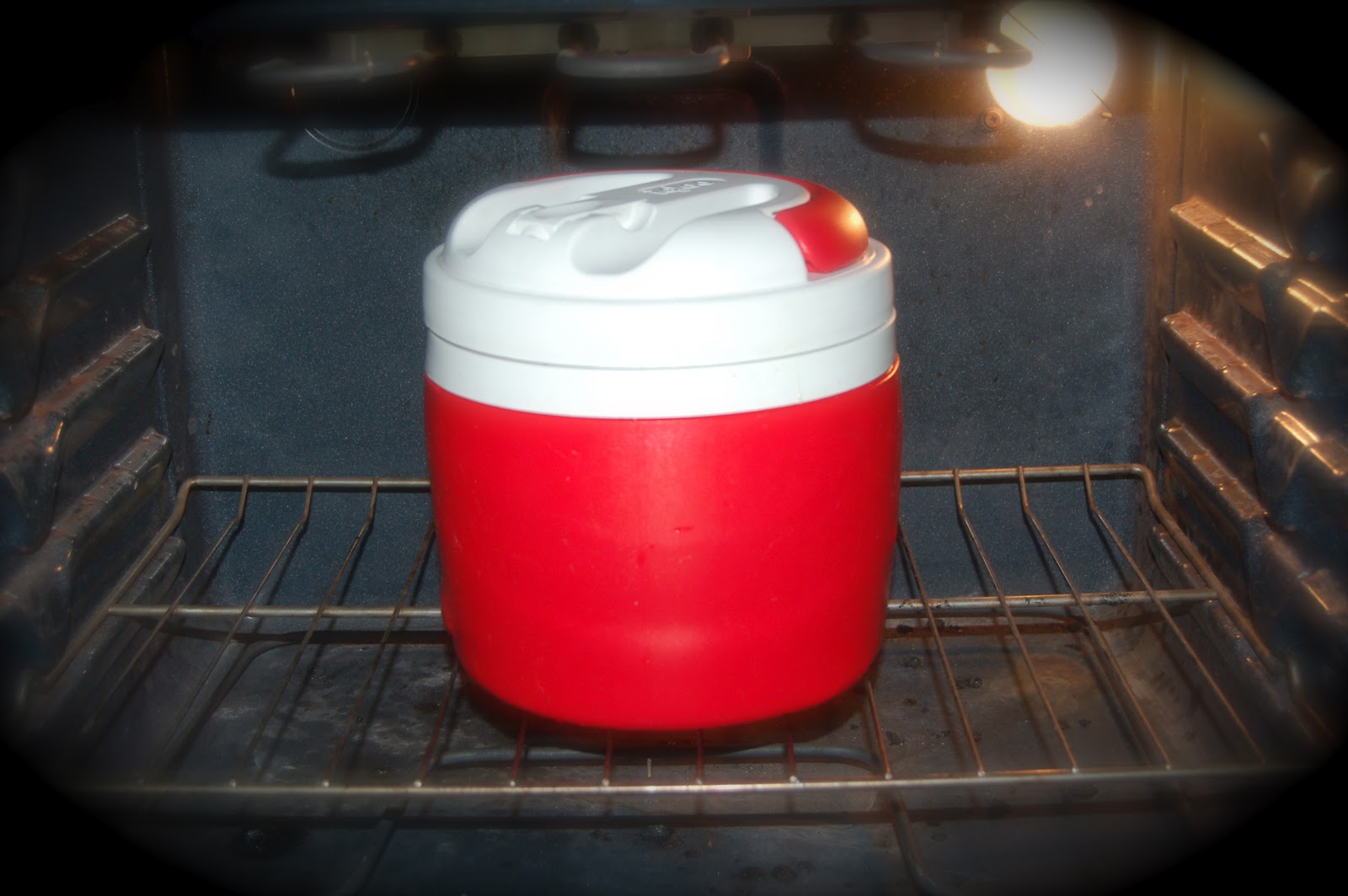
    I have a large plastic thermos, and inexpensive item that is world-weary and not particularly water-tight. It has a capacity of about 3 Litres, and is perfect for making a large batch of yogurt for our family. Since we’ve been freezing the local summer fruit bounty, the kids are making a lot of smoothies and subsequently we go through a lot of yogurt. This is so cheap and easy.

    A Thicker Yogurt

    4 cups boiled water
    4 cups tap water
    4 2/3 cups instant skim milk powder
    1/2 cup fresh yogourt with active bacterial culture, or two packets of yogourt starter

    Combine boiled and tap water in a large thermos. In my house the resulting temperature is about 115ºF, which is ideal for starting a yogourt fermentation. I can trust this temperature, but if you’re trying this for the first time, definitely check the temperature of the mixture and adjust as necessary. Whisk in skim milk powder, then whisk in the fresh yogurt. Using skim milk powder allows you to get a thicker yogurt by getting more milk solids in less liquid volume, and it means you don’t have to go the fussy process of heating the milk to kill any lingering thermophils.

    Place lid on thermos. Place in unheated oven with the light turned on to provide a bit of warmth. Leave undisturbed for 8 hours. (Put a sticky-note on the oven to remind yourself and others not to turn it on! Ask me why my thermos is world-weary with bubbly plastic on the bottom…) With luck you should have a nice thick yogurt. It will firm up a bit more in the fridge.

    Yield: 8.5 cups of yogurt

  • Shibori

    I’ve decided that the time has come to make a quilt. I made quilts for each of my children, around the time they graduated to big beds of their own. Erin got my first quilt ever: appliquéd jungle animals in the main squares. Noah was given a community quilt by a host of my friends, a colourful alphabet quilt. I later made him a more “grown-up” quilt, a repeating stars motif with black and turquoise whale printed fabric. For Sophie I made a quilt of drawings the older two children had made, embroidering a replica of each picture (Noah was very into dinosaurs at the time!) onto a square of muslin. Fiona got a tie-dye quilt: the older three kids and I tie-dyed individual squares in a rainbow of colours and designs, and added black-and-bold sashing.
    Who will get the next quilt? Perhaps it will belong to the grown-ups. Perhaps it will be a “spare bed” quilt. Not that we have a spare bed, but it never hurts to have an extra quilt around. 
    I have a vision of a quilt-top made of denim. I know this is a really challenging vision: denim is nasty to work with once you get more than two thicknesses of it. As you inevitably do piecing a quilt. But I have a good sewing machine, and a fair bit of ingenuity and experience. We’ll see. 
    I’ve been harvesting used-up jeans for years, and the local donation store is a ready repository of plus-sized jeans in a beautiful array of indigos. Denim will be easy to find.
    The striking element in my quilt will be the shibori sampler blocks. Shibori is a Japanese textile art. It’s a form of resist dyeing traditionally done with folding and stitching, using indigo. I first saw it years ago in a quilting book I bought. Then my kids were able to experiment with it during their art workshops with a local textile artist:
    The central motif here is done with cherry pits. The pits are pinched in the fabric and the “neck” of the pinch is wound with thread. The upper and lower patterns are what is called “mokume,” or wood-grain. they’re made by pleating the fabric with multiple parallel running stitches which are then tightened. The muslin above has been dyed with a fibre-reactive dye, exactly the same stuff we use for tie-dyeing. Lots of it lives in our basement. 
    My quilt will not use indigo either, except in the denim, nor will it use a traditional blue colour for the shibori. Instead the shibori blocks will be done in fire-engine red. I intend to make each of the two dozen blocks using a different shibori pattern or technique. Here are a few of my first dozen samples. The sewing is shown on the left, and the right panel shows the same sample with the thread drawn and tied as tightly as I could manage.
    Top: a fine-grained mokume. 
    Middle: Komu, a geometrically pleated technique using stitched squares and twist-tied cherry pits
    Bottom: Maki-agi, a stitched shape resist. 

    I have a dozen or so ready for the dye bath now. I’ve done a traditional arashi (diagonal pole-pleated resist), a heart in maki-agi, some itajime (folded shape-resist), some meandering ori-nui, and various other experiments. I have some extra fabric, so if a few of the squares don’t work out that will be fine.

    But I’m so excited to be accumulating all these surprises-in-waiting! It will take me another week or so to finish a couple of dozen samples. Then it will be dye time … and the big reveal!

  • Dandelion syrup

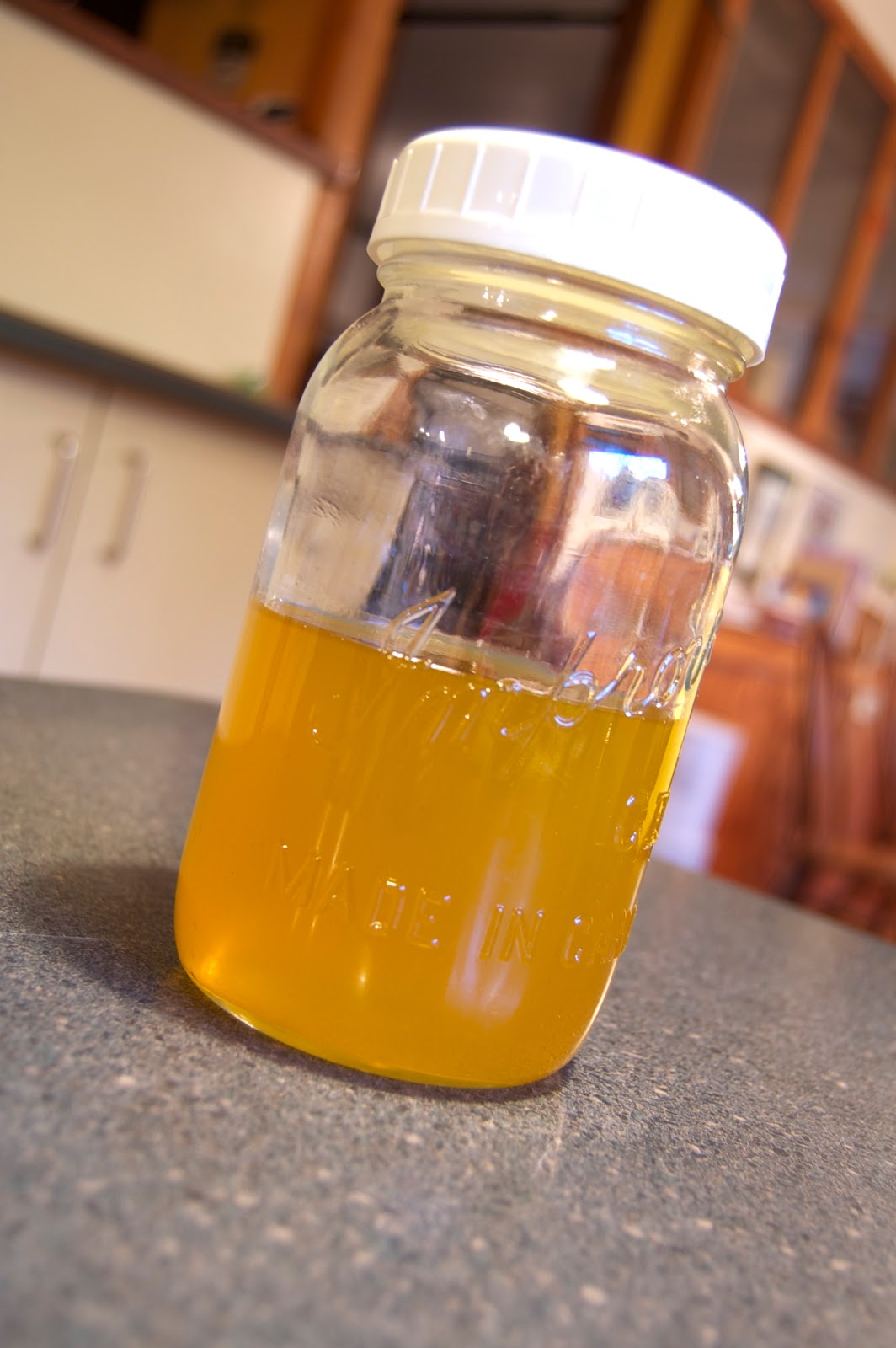
    About 6-8 cups of dandelion flowers yielded about 1 cup of packed yellow petals. We mixed this with 2 cups of sugar and 2 cups of water, brought to a simmer and allowed to cook for an hour or so, gradually reducing in volume to a syrupy consistency. Then we added the juice of one small lemon, strained out the petals, and cooled.

    It tastes wonderful! Like spring sunshine mixed with honey and lemon. Delicious on ice cream.

  • Hello, trees

    Fiona and I have been visiting the trees in the forest that surrounds our home recently, appreciating them anew as they emerge from the snow and prepare for a new season of growth.

    Yesterday we checked out the red cedar bark, which we will use for basket weaving. Years ago the kids did a workshop with this lovely local lady, and while they’re a lot of work, the tiny baskets we have since made have been very striking and rewarding. It’s still too early in the season for it to come away easily in long strips, but we’re looking forward to harvesting some in May. We then dug up some red cedar roots, to decide how useful they’d be for embellishing our baskets. I had read that they make great sewing material, but had never taken the suggestion seriously. They really are amazing. The slenderest ones are strong, pliable and lovely to look at, and they dry and increase in strength very quickly once harvested.

    We collected armloads of white pine cones to use a fire-starter next winter.

    And then we made our acquaintance again with the birch trees. We tapped a couple of birch trees years ago, but our sap collection set-up wasn’t ideal and we didn’t get enough sap to make a proper syrup. Because birch sap is about five times less sugary than maple sap, you need a heck of a lot of it!

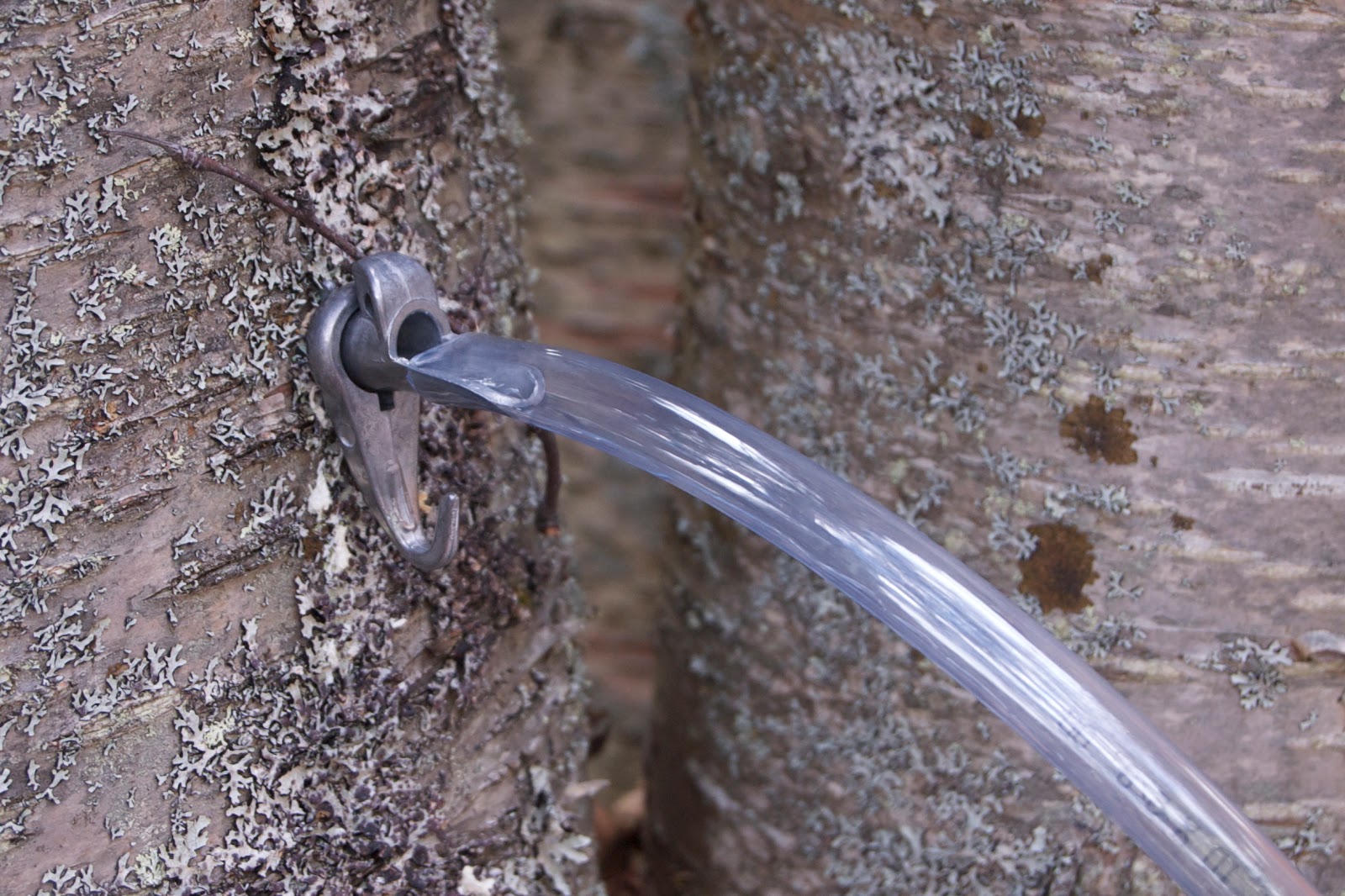
    Sometime in the intervening years I managed to purchase four spiles and today we picked up some clear 1/2″ tubing at the local hardware store. All it took was a quick bit of work with the portable drill and a couple of taps with the mallet the trees began spilling their sap out for us with eagerness. We plugged a couple of tubes into each of two glass carboys and within an hour or two had a couple of gallons of sap.

    I imagine it will be incredibly time- and energy-consuming to boil the stuff down, but I’m happy to do it just once, to experience the process and the taste of the syrup.

    Birch sap is sterile and contains trace amounts of minerals, xylitol and various other good things. It’s actually a great source of safe drinking water. Not that we don’t already have safe drinking water, but hey, when civilization crumbles, this might be a useful piece of knowledge.